
Find the Best Scuba Diving in Saudi Arabia Beneath the Red Sea
Saudi Arabia may not be the first destination that comes to mind when planning a diving trip, and that is exactly part of its appeal.
Along the Saudi Red Sea coast you can find crystal clear water, reefs, wrecks, large marine species, and uncrowded dive sites. Some areas can be accessed from Jeddah, while other sites lead you closer to the less accessible Red Sea waters of Yanbu, Al-Lith, and the Farasan Banks.
And then there are the conditions. In Saudi Arabia, water temperatures usually hover around 20°C to 31°C, while underwater visibility can extend up to 60 meters. The variety of dive experiences here ranges from snorkelling and recreational diving to technical dives.
So, where can you find the best scuba diving in Saudi Arabia?
It really depends on what type of dive experience you are looking for.
The Red Sea Dive Spots Worth Building a Trip Around.
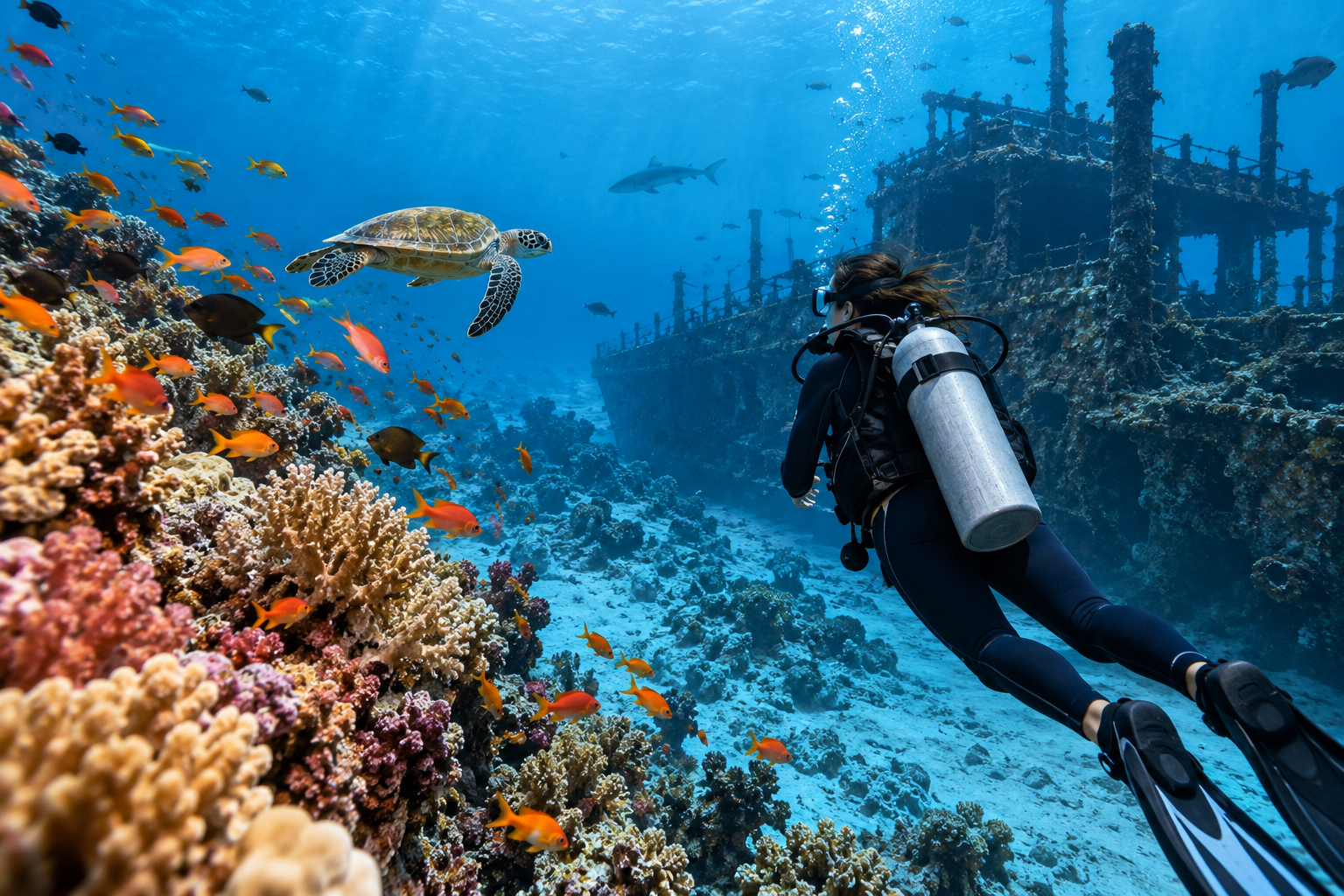
One of the major benefits of diving in Saudi Arabia is diversity.
The western coast is home to pristine reefs and an impressive variety of marine life.Over 1,200 species of fish, in addition to sharks and other pelagic creatures, are found there.
That marine biodiversity means two dives along the same coastline can feel completely different.
A dive one morning may see you gliding above the colorful corals. A dive another day may see you exploring a wreck site that dates back decades and is now fully integrated into the reef ecosystem.
Each Red Sea dive site in Saudi Arabia brings something different to the experience.
Farasan Banks offer remote reefs and pelagic encounters. Jeddah is the place where you will get reef diving combined with the wrecks, the most popular ones in the Kingdom. The sites in Yanbu are known for clarity of water and reef systems, while those in Al-Lith offer pristine reefs and whale shark aggregations.
This makes it possible to plan a diving trip around the kind of experience you actually want.
Why Jeddah Scuba Diving Belongs on Your List.
Jeddah is one of the easiest places to start for most divers.
This location is one of the most popular diving sites in Saudi Arabia and gives divers access to both reefs and Red Sea wrecks by boat.Moreover, shore diving is also possible but mostly resort-related.
If you are more interested in marine life than wrecks, Sharm Obhur, located in the north of Jeddah, is one of the options for you. This location may include turtles, lionfish, eels, and clownfish.
However, wreck diving makes Jeddah scuba diving quite unique.
Cable Wreck, which is located in the southwest from Jeddah, is the remnants of the Greek ship Staphonos, which went down in 1978. Among other things, Staphonos carried on board cables, steel beams, and chain-link fencing, and the depth of the wreck is approximately 24 meters.
Marine life in this location may include whitetip sharks, blue-spotted stingrays, and dogtooth tuna. However, strong currents can make the dive more challenging so experience is required.
What Makes Yanbu Coral Reefs So Easy to Remember?
Travel around 350 kilometres north of Jeddah and the diving experience begins to change.
The place is described as the “capital of diving” and characterized by very clear waters where visibility can be good enough to see the seabed at about 60 feet deep while still on the boat.
However, visibility in the waters around Yanbu is not all that there is to enjoy in the coral reefs of Yanbu.
This location has several popular sites that include Nemo Garden, Seven Sister Reef and Abo Qalawa.
It is also one of the places that offers wreck diving, thanks to Iona Wreck, one of Saudi Arabia’s famous wrecks.
For photographers and divers who have clear water as their preference Yanbu can be an excellent choice.
It is the kind of destination where taking your time can be more rewarding than rushing through several sites in one day.
Farasan Banks Diving Takes You Beyond the Usual Route.
Whereas Jeddah is all about accessibility and Yanbu is famous for its crystal clear water, the Farasan Banks offer a more remote side of Saudi diving.
The region consists of islands and reef systems located in the southern end of the Saudi Red Sea. These reefs are mostly untouched and new dive sites are still being discovered in the region.
The most exciting part about Farasan Banks diving is the pelagic activity that can be seen in the region.
During winter and spring, the region could attract schooling hammerhead sharks, barracuda, tuna, and several other sharks.
This is certainly a completely different experience compared to those who like coastal dives where they spend only a short time at the reef.
Remote reef systems usually require more planning, which is why a liveaboard safari would make a great choice. A liveaboard safari can be an attractive option for divers who want to spend more time exploring remote areas.
For divers looking for a stronger sense of exploration, the Farasan Banks offer exactly that.
Choose the Right Saudi Diving Seasons for Your Trip.
Saudi Arabia is considered a year-round diving destination although your experience will largely depend on both the location and timing of the visit.
The southern parts of the Saudi Red Sea is particularly suitable in winter and spring as water temperatures remain in the low 80s Fahrenheit and chances for pelagic encounters would be higher.
In summer the water temperature in the southern parts could reach 90°F, which would make the northern parts preferable. The period between March and May is considered the high season of the Red Sea, whereas from December to February is the low season.
In the area of Jeddah, the water temperature will usually range from 27 to 30°C but can fall to around 22°C in the period from November to March. Moreover, the winter may also bring bigger waves and stronger currents due to the southerly winds.
Al-Lith will offer you another seasonal attraction.
Jabal Al-Lith is known as the whale shark spot as large gatherings are reported from March to June.There are also clear waters, shallower reefs and calmer conditions for less experienced divers.
Find Your Next Red Sea Dive With Mermates.
The best scuba diving in Saudi Arabia does not come down to one reef, one wreck, or one city, but not based on any single reef, wreck, or even city.
You might want to descend beside a shipwreck off Jeddah, dive among the pristine waters of Yanbu, venture out towards the more distant reefs at the Farasan Banks, or take a dive trip to Al-Lith, which includes the potential to see whale sharks.
The coast of Saudi Arabia offers divers the opportunity to select what they want their underwater adventure to be.
With reefs, wrecks, coral gardens, sharks, incredible marine diversity, and an under-explored coastline, there is more than enough to explore away from the typical diving sites.
With Mermates, your next Saudi Red Sea adventure starts with finding the diving experience that fits you best.