Where Will the Red Sea Best Diving Spots Take You Next?
In fact, the Red Sea can provide you with two totally different diving opportunities at the same place just because you have chosen to visit the region in another month.
One season may bring warmer water and easier northern diving, while another can shift the focus south toward remote reefs and larger pelagic species.The visibility, currents, and even the marine life you wish to see are subject to certain changes.
That is why knowing the best time to dive in Saudi Arabia can help you plan the experience around what you actually want to see and do underwater.
Saudi Arabia is a diving destination any time of the year, but this does not mean that every month has to be the same. Water temperature, underwater visibility, sea conditions, location and the movement of the seasonal marine life may influence the choice of the kind of dive trip you have to plan. Red Sea water temperatures can range roughly from 20°C to 31°C, while underwater visibility can become exceptionally clear in favorable conditions.
With Mermates, the question is not only:
“When should I dive?”
But:
What kind of Red Sea diving experience would you like to get?
What Can the Saudi Diving Months Unlock for You?
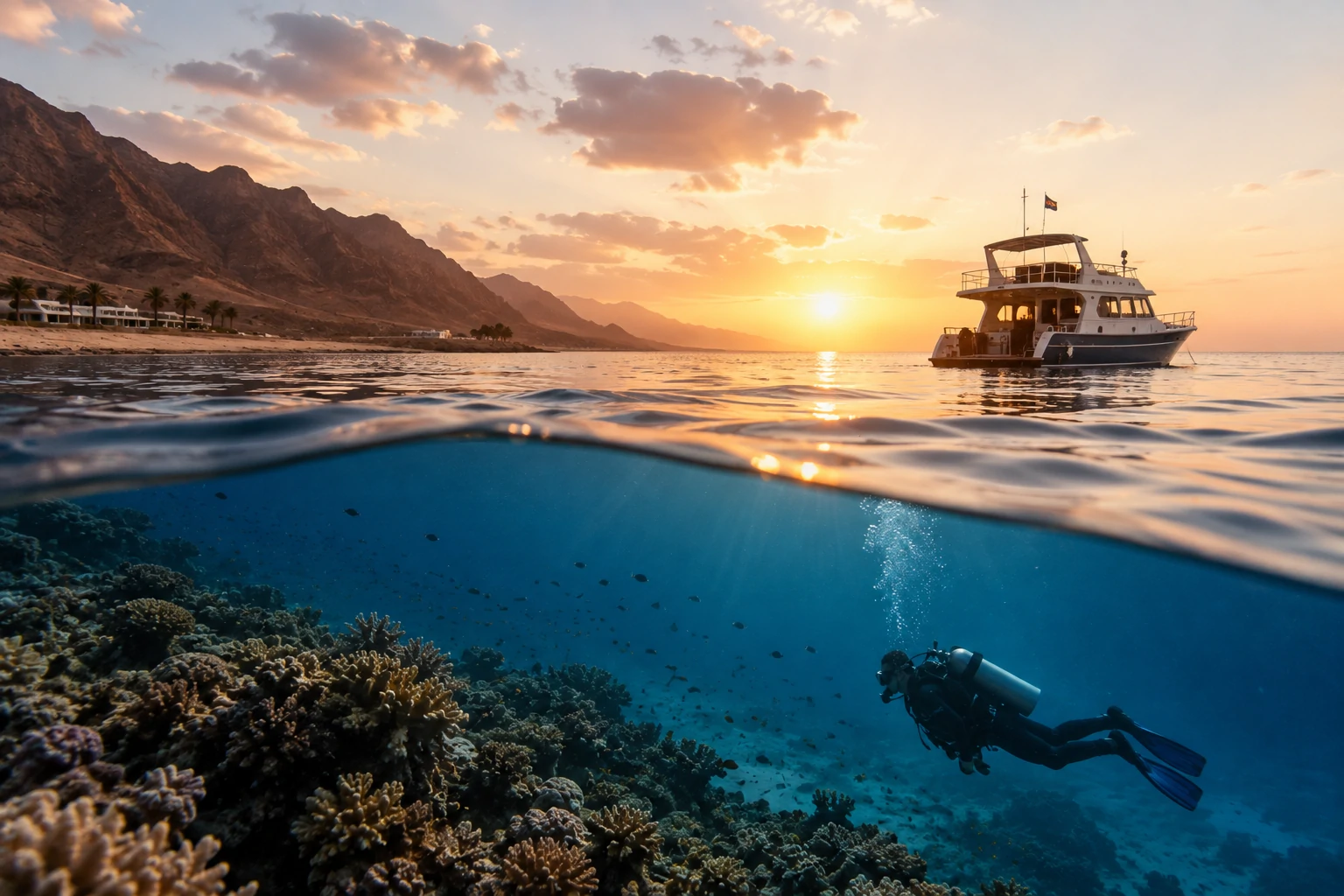
There is no fixed Red Sea diving season.
It is possible to dive any time of the year, and each season will provide something different in each region. Cooler weather might be more comfortable when spending a lot of time in the water, while warmer weather could bring an excuse to go deeper into the northern waters.
October-May may be considered quite a convenient season for diving, and spring may be especially exciting for diving thanks to warm water, abundant marine life, and good weather on the ocean. Saudi Arabia can be dived throughout the year, but seasonal differences between the northern and southern Red Sea can make some periods better suited to certain destinations and dive styles.
However, the choice of season should never be done independent of the choice of location.
A photographer will want the best visibility underwater, a person who hopes to see sharks will pay more attention to the pelagic movement. A person planning to repeat visits to the same reef would find temperature and calmness of sea very important.
And even the equipment may vary with the change in the season: wetsuit thickness depends on the water temperature, dive duration, and how quickly you become cold rather than on some standard season rule.
The calendar gives you a starting point. Your dive goals should make the final decision.
but your goals should be the ultimate determinant.
Where Will the Saudi Diving Months Take You Next?
Divers with different types of goals prefer different months to dive in Saudi.
For divers with many dives planned for several days, from October to May may seem like better conditions than summer. For example, spring may work well in case you would like to do both reef diving and photographing of seasonal animals.
In summer diving in Saudi doesn’t end.
From June to September, the surface temperature gets much higher, and northern regions get more interesting with the migration of marine life throughout the Red Sea.
And here is why finding “the best month” may become useless.
Think about what you want from the dive before you choose the month.
Do you prefer to dive reefs calmly? Dive wrecks? Photograph marine animals? Or you would like to see the larger marine species or even spend some days offshore? Are you also planning around a training goal?
Sometimes it could be useful to consider the seasonal activity of certain marine animals, which makes the same reef completely different at another season.
Where Farasan Banks Diving Season Gets Wilder.
The Farasan Banks diving season becomes especially important if you are planning a dive that involves the exploration of distant reefs and pelagic encounters.
Farasan Banks is famed for its exotic islands, offshore reefs and pelagic life forms. The seasons of winter and spring are connected with pelagic life activity, such as schooling hammerheads, barracudas, tunas, sharks and others.
For experienced divers, this can make winter and spring particularly interesting.
But hammerhead season is never a guaranteed appointment with wildlife.
Currents, water temperature, food and natural behavior of the animals determine if they will be present or not. Right season will increase chances without providing any guarantees.
The same is true about whale shark sighting.
Spring can also offer seasonal opportunities for whale shark sightings around southern Saudi waters, including Jabal Al Lith and Farasan Banks.
This is why it makes sense to choose the trip that will stay valuable even if you do not manage to meet the animal of your dreams.
Reef should be worth visiting. Wildlife should be the bonus to it.
Chase the Blue Through Yanbu Diving Season
The Yanbu diving season is another reminder that the Saudi Red Sea should not be treated as one single diving destination.
The fact is that Yanbu is located further up north and characterized by coral reefs, drop-offs, wrecks and good visibility. Yanbu is known for strong underwater visibility and sites such as Iona Wreck, Nemo Garden, Seven Sister Reef, and Abo Qalawa.
The northern routes may become especially appealing during warmer periods of the year.
For underwater photographers, this may constitute an important benefit since clear water helps to capture a larger portion of a reef wall, wreck or schools of fish into the frame. It also makes navigation easier and gives underwater landscape a proper scale.
Nevertheless, the visibility level cannot be considered constant.
It depends on such factors as weather conditions, currents, previous conditions and the chosen dive site.
Rather than selecting Yanbu simply because you were told that the water is clear there, select it based on the appropriate combination of season, site and type of dives.
Make the Red Sea Bigger with Saudi Liveaboard Season.
A day boat transports you to a dive site.
Liveaboard provides an opportunity for altering the whole way you get to know the Red Sea.
The Saudi liveaboard season becomes especially helpful when it is required to discover offshore reefs, islands, walls, and other distant locations that cannot be found through separate day voyages.
Routes may vary depending on the seasons and behavior of the marine life. Northern itineraries around Yanbu can become more appealing from roughly June to September, while southern Farasan Banks routes are often better suited to approximately November through May.
This kind of flexibility is probably the most beneficial part about liveaboard diving.
It allows changing the route in accordance with the season rather than following the same one throughout the year.
However, diving at distant locations requires certain preparation.
Certification level, recent diving experience, currents, expected depth, weather, equipment, and calm sea conditions all matter when several days of diving take place far from shore.
Thus, the appropriate liveaboard season is not just the time when boats sail.
Ready for Your Next Red Sea Dive with Mermates?
There is no single perfect month for every diver.
The right month of diving in Saudi Arabia will depend on what kind of experience you are aiming at
It could be diving into the faraway and isolated southern reefs of Farasan Banks. It could be diving in the clear waters of the northern regions of Yanbu and visiting some wrecks there. It could be a hunt for whale sharks or just warm waters with a good view of the reefs.
The decision should be made according to how the destination, season, weather, and your goals for the diving session fit together.
That is where Mermates can make the planning easier.
Instead of selecting the month due to it being on the general list of “best seasons,” begin with your goal of the experience and create the dive out of it.
Tell Mermates what you want from your next Red Sea adventure and start planning the Saudi diving season that fits you best.